Development · For homeowners and developers
How to subdivide a section in Auckland: from feasibility to new titles
By the Tungsten Construction team · Reviewed · 4 min read
The short answer
An Auckland subdivision runs in five stages: a feasibility check of zoning, services and costs; a subdivision resource consent; the physical works required by the consent conditions; the council's section 223 and section 224(c) certificates; and lodging the survey plan with LINZ so new records of title are issued. Building the homes can run alongside or after these steps.
Key takeaways
- Every subdivision in Auckland needs resource consent, and the consent alone does not create new titles.
- Wastewater and stormwater capacity is often the deciding factor in whether a subdivision stacks up.
- The section 223 certificate approves the survey plan; the section 224(c) certificate confirms the consent conditions are met.
- Section 223 approval lapses after three years if the plan is not deposited with LINZ.
- Many people combine subdivision with building, so the homes are designed, consented and built as one project.
Subdividing is one of the most common reasons Auckland landowners first talk to a builder. Maybe the back of the section is unused, or the land is large enough for two or three homes. The process is well established, but it has a strict order, and skipping the early checks is where most of the expensive surprises come from.
Stage 1: Feasibility
Before paying for drawings, find out whether a subdivision is realistic and whether it makes financial sense.
Zoning. The Auckland Unitary Plan sets minimum site sizes and the number of homes allowed in each zone. Look up your address in the online viewer and note any overlays, such as flood plains or special character areas. Auckland’s zoning is being revised through Plan Change 120, with final decisions expected in 2027, so confirm which rules currently apply to your site.
Services. Ask early whether the public wastewater and stormwater networks can take more homes. A new connection that needs a long or deep pipe run, or an upgrade to the network, can change the numbers completely. Watercare also charges an infrastructure growth charge for new connections.
Access. Each new lot needs legal and physical access. Rear sites need a driveway or right of way of an acceptable width and gradient, which can use up much of the land.
Costs and value. Put together a realistic budget: professional fees, consent fees, development contributions, infrastructure charges, civil works and legal costs. Compare that with the value of the new lots or finished homes, not with what you hope they will be worth.
A planner or surveyor normally leads this stage. Bringing a builder in at the same time helps if you intend to build the new homes, because building costs and site works can then be priced together.
Stage 2: Subdivision resource consent
Every subdivision in Auckland needs resource consent under the Resource Management Act. The application usually includes a scheme plan prepared by a surveyor, an assessment against the Unitary Plan rules and engineering information for services, earthworks and access.
The statutory timeframe for a non-notified resource consent is 20 working days, but the clock stops each time council asks for further information. Applications that are notified, or that need specialist input, take longer.
If you plan to build homes at the same time, your planner may apply for a combined land use and subdivision consent. This is common for infill developments, where the homes and the lot boundaries are designed together.
The consent will come with conditions. Read them carefully: they set out the works you must complete before titles are issued.
Stage 3: Engineering approval and physical works
Most subdivisions need engineering plan approval for the services and access, followed by the physical works. Typical works include:
- new wastewater and stormwater connections, and sometimes upgrades to public pipes;
- water supply connections and meters;
- power and telecommunications ducts;
- driveways, vehicle crossings and retaining walls;
- earthworks and any stormwater management devices required by the consent.
This is where costs are most likely to move, because ground conditions and existing services are not always as expected once digging starts.
Stage 4: Section 223 and section 224(c) certificates
Once consent is granted, the surveyor prepares the final survey plan (the land transfer plan). Council checks it against the consent and, if it matches, issues a section 223 certificate.
When all the consent conditions have been met, including the physical works and payment of development contributions, the surveyor applies for a section 224(c) certificate. Council inspects the works and reviews each condition before signing it off. Any consent notices that need to be registered on the new titles are prepared at this stage.
One timing rule matters: section 223 approval lapses three years after it is given if the plan has not been deposited with LINZ. Plan the physical works so you are not racing that deadline.
Stage 5: Deposit the plan and issue new titles
Your lawyer or surveyor lodges the plan and certificates with Land Information New Zealand (LINZ). Once the plan is deposited, LINZ issues a new record of title for each lot. Council does not do this for you; the consent holder or their agent must apply.
Building the homes
Many landowners subdivide so they can build. There are two common approaches:
- Subdivide first, then build. You end up with vacant titles you can sell or build on later.
- Subdivide and build together. The homes are designed and consented with the subdivision, and construction can start once building consent is granted, often while the titles are still being finalised.
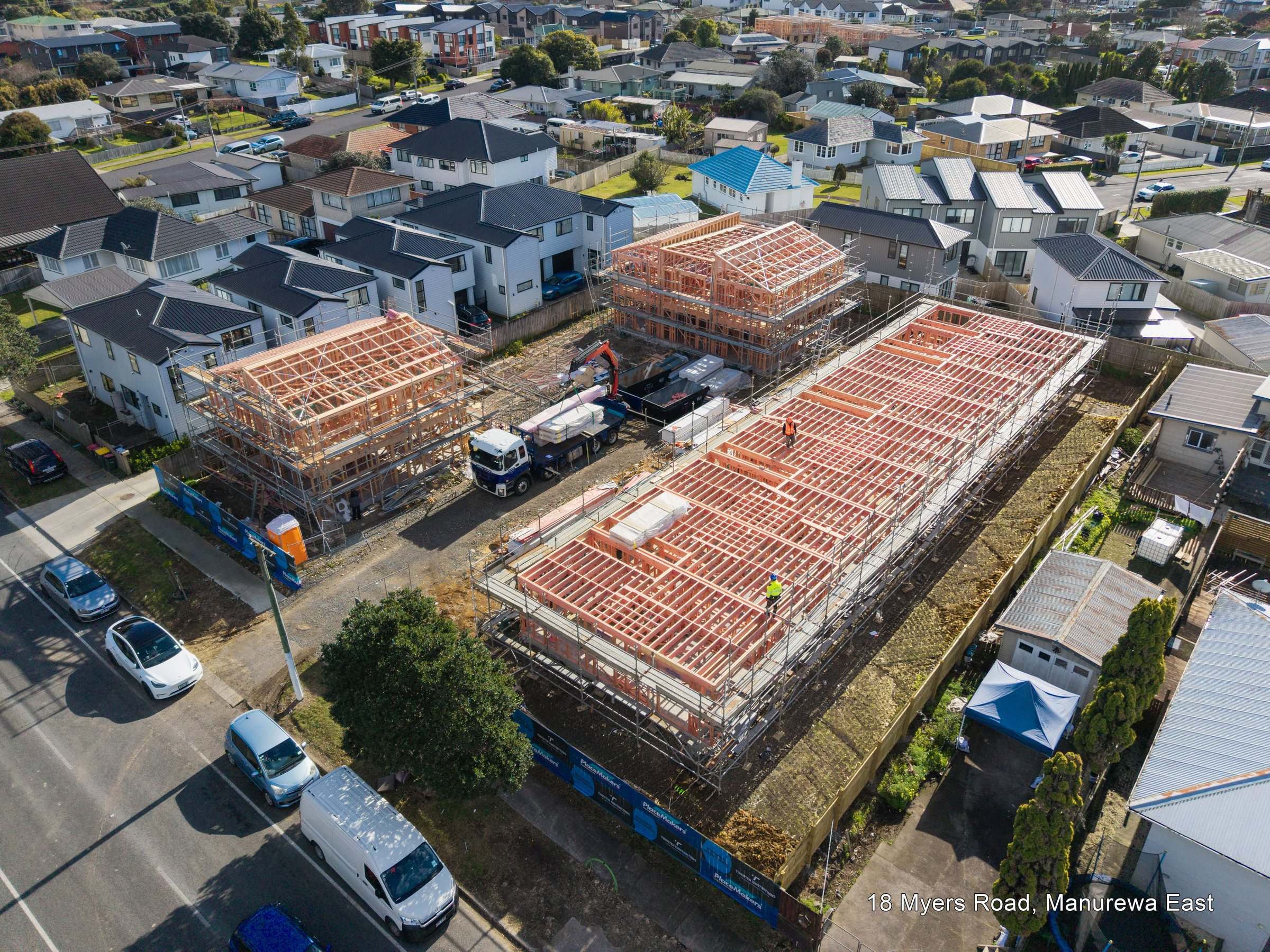
Building together usually shortens the overall programme and lets the same team manage site works, services and the homes. It is the approach we see on most infill developments, including our Myers Road terraces in Manurewa East and Finnerty Avenue homes in Howick.
Where to start
If you are wondering whether your section can be subdivided, start with the zone, the services and an honest budget. Then talk to a planner and a builder together. Tell us about your site and we will share what we can see from a construction point of view, including access, site works and the kind of homes that would suit the land. If you plan to build the homes as well, see how we work as main contractor for developers and our terraced homes on Te Atatu Road.
Frequently asked questions
How long does a subdivision take in Auckland?
A straightforward two-lot subdivision commonly takes six to twelve months from feasibility to new titles, and longer where services need upgrading or the consent is complex. The statutory clock for a non-notified resource consent is 20 working days, but it stops whenever council asks for more information.
Do I need to build the houses before I get new titles?
Not always. Some subdivisions issue titles for vacant lots, while others are tied to a land use consent for specific homes and may require the buildings to reach a certain stage. Your planner will explain which approach suits your site and consent.
What costs are involved in subdividing?
Expect planning, surveying and engineering fees, council consent and certification fees, development contributions, infrastructure charges for new water and wastewater connections, the physical works for services and access, and legal fees for title issue. Service upgrades are often the largest and least predictable item.
Can a builder help with a subdivision?
Yes. A builder who also builds the homes can price the civil and building work together and help sequence the project, while your planner and surveyor lead the consent and title process.
Sources and further reading
- Subdivision of property (Auckland Council)
- Subdivision registration requirements (LINZ)
- Development contributions (Auckland Council)
- Builders and developers (Watercare)
- Auckland's Future Housing Plan, Plan Change 120 (Auckland Council)
This guide is general information for New Zealand, current at the review date above. Rules and council requirements change, so check your own situation with the relevant council, your lawyer or other qualified adviser before relying on it.