Building your home · For homeowners
How long does it take to build a house in Auckland?
By the Tungsten Construction team · Reviewed · 3 min read
The short answer
Plan for the whole project, not just construction. Design and engineering, then building consent (and resource consent if needed) usually take several months before work can start on site. Construction of a standard single home then commonly runs for many months, depending on size, complexity, weather and the site. Finally, the code compliance certificate is issued after the final inspection.
Key takeaways
- The time before construction (design and consents) is often as long as the build itself.
- Building consent has a statutory 20 working day clock, which stops when council asks for more information.
- Resource consent adds time if your design breaks a planning rule.
- Weather, ground conditions and late design changes are the most common causes of delay.
- The code compliance certificate comes after the final inspection, and council has 20 working days to decide.
When people ask how long a new home will take, they often mean the time on site. In practice, the work before construction starts is just as important to plan for. Here is how an Auckland new build typically breaks down, and where time is most often lost.
The four phases of a new build
Phase 1: Site investigations and design
This covers the topographic survey, geotechnical report, concept design, developed design and engineering. The time depends on how quickly decisions are made and how complex the design is. A custom home with several rounds of changes takes longer than a design adapted from an existing plan.
Bringing a builder in during this phase helps keep the design within budget, which avoids redesign later. Our guide on what to do after buying a section explains the early checks.
Phase 2: Consents
Resource consent is only needed if your design does not meet the planning rules for your zone, or if you are subdividing. The statutory clock for a non-notified consent is 20 working days, but further information requests pause it.
Building consent is needed for almost all new homes. Councils have 20 working days to decide, again with the clock stopping for requests for information. A complete, coordinated set of drawings and specifications is the best way to keep this phase short. Our guide to resource consent and building consent explains the difference.
Phase 3: Construction
The build itself moves through these stages:
- Site works and foundations. Earthworks, drainage, services and the slab or piles.
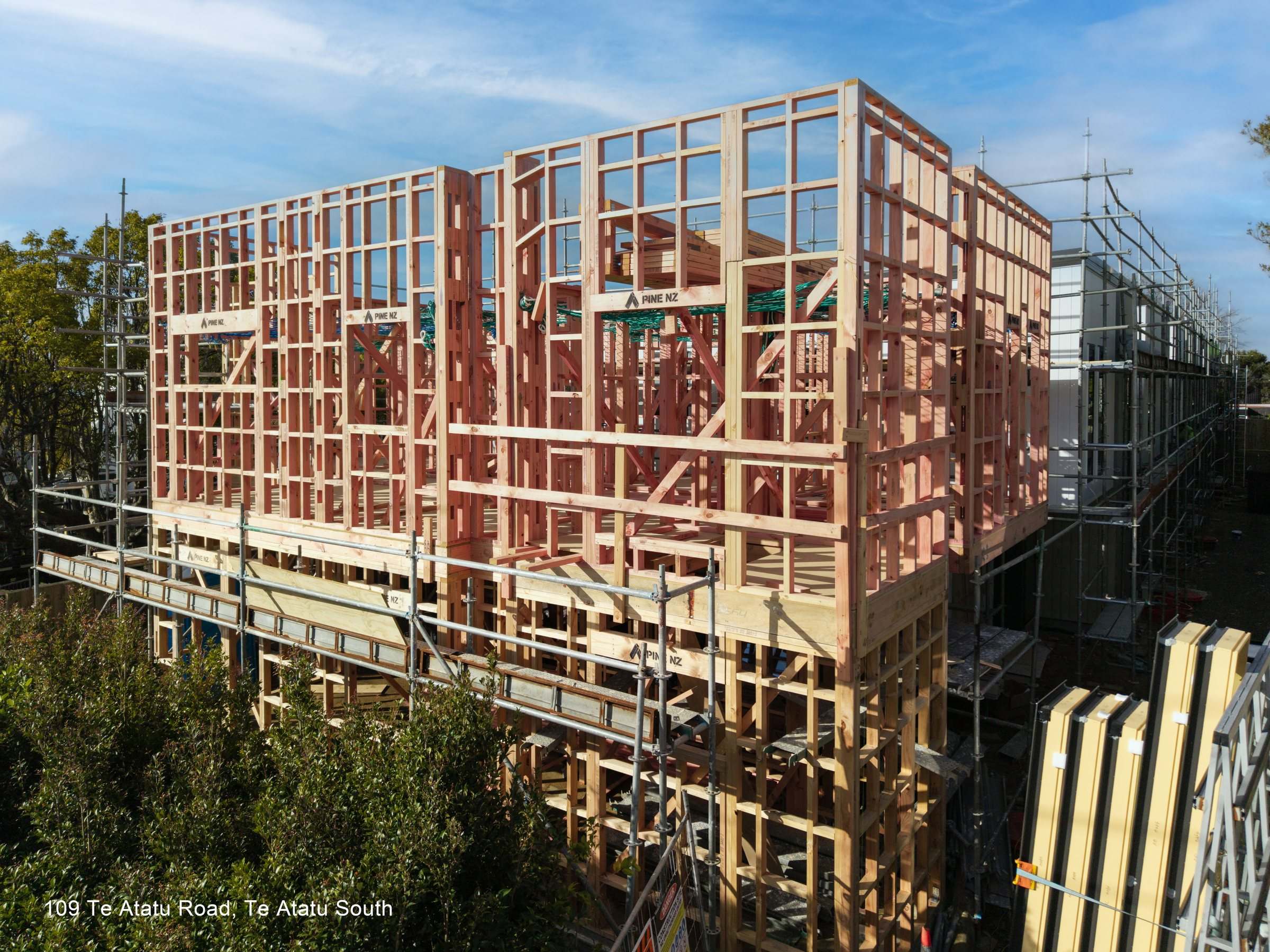
- Framing. Wall frames, floor framing for upper levels and roof trusses.
- Roof, joinery and wrap. The building becomes closed in against weather.
- Cladding and services rough-in. Plumbing, electrical and other services go into the walls.
- Insulation and linings. Inspections are booked before walls are lined.
- Fit-out. Kitchens, bathrooms, doors, flooring, painting and fittings.
- External works. Driveways, paths and anything else in the contract.
Council inspections happen at set points, such as foundations, framing, pre-line and final. Work cannot move past an inspection point until it is passed.
How long construction takes depends on the size and complexity of the house, the site, the time of year and how quickly selections are confirmed. Your builder should give you a programme with the main milestones before you sign.
Phase 4: Completion and code compliance
When the work is finished, the final inspection is carried out and the code compliance certificate (CCC) is applied for. Council has 20 working days to decide. Lenders often require the CCC before the final drawdown, and it is an important document when you later sell or insure the home.
What causes delays
- Weather. Auckland winters slow earthworks, roofing and exterior work.
- Ground conditions. Rock, soft ground or unexpected services found during excavation.
- Late design changes. Changes after consent may need an amendment, which takes time.
- Slow decisions. Kitchen, tile and fitting selections that are not made on time hold up ordering.
- Information requests. Incomplete consent applications pause the council clock.
- Supply of specific products. Imported or custom items can have long lead times.
How to keep your build on time
- Settle the design and specification before applying for building consent.
- Make selections early, ideally before construction starts.
- Ask for a written programme and regular updates against it.
- Keep a contingency of time as well as money.
Planning your build
If you are working back from a move-in date, talk to us early. Send us your site address and rough plans and we will give you a realistic view of the timeline from where you are today.
Frequently asked questions
How long does a building consent take in Auckland?
Councils must decide a building consent application within 20 working days, but the clock pauses whenever they request further information. A complete, well-prepared application is the best way to avoid long pauses.
Can construction start before consent is granted?
No. Building work that needs a building consent cannot start until the consent is granted. Some early site investigations can be done beforehand, but not the building work itself.
Do two-storey homes take longer to build?
Usually somewhat longer than a single-storey home of the same area, because of scaffolding, extra structure, stairs and more complex sequencing. Design complexity and specification often matter more than the number of storeys.
What happens at the end of the build?
Once the work is complete, the final inspection is carried out and the code compliance certificate (CCC) is applied for. Council has 20 working days to decide. Your builder should also provide producer statements, warranties and maintenance information.
Sources and further reading
- Building consent process, building.govt.nz
- Issuing code compliance certificates, building.govt.nz
- Resource consents (Auckland Council)
This guide is general information for New Zealand, current at the review date above. Rules and council requirements change, so check your own situation with the relevant council, your lawyer or other qualified adviser before relying on it.