Money and contracts · For homeowners
How construction loans and progress payments work for a new build
By the Tungsten Construction team · Reviewed · 3 min read
The short answer
A construction loan releases money in stages as the house is built, rather than as one lump sum. The bank typically needs your building contract, consented plans and a valuation of the finished home, then pays each progress claim after checking the work. New builds are exempt from the Reserve Bank's loan-to-value restrictions, which can make a smaller deposit possible, but each bank still applies its own lending criteria.
Key takeaways
- Construction loans pay out in stages that match the building contract's payment schedule.
- Banks usually require a signed fixed-price contract, consented plans and an 'on completion' valuation.
- Loans for new builds are exempt from the Reserve Bank's LVR speed limits, but banks set their own deposit requirements.
- Interest is normally charged only on the amount drawn down so far.
- Keep a contingency outside the loan for variations and costs not in the contract.
Most people building a new home borrow for at least part of it. Lending for a build works differently from buying an existing house, because the security, your future home, does not exist yet. This guide explains how it usually works in New Zealand and what to have ready.
How a construction loan works
Instead of paying the full amount on settlement, a construction loan is drawn down in stages as the build progresses. A typical sequence:
- Land. If you are buying the section, the land portion may be funded first.
- Deposit to the builder on signing the building contract.
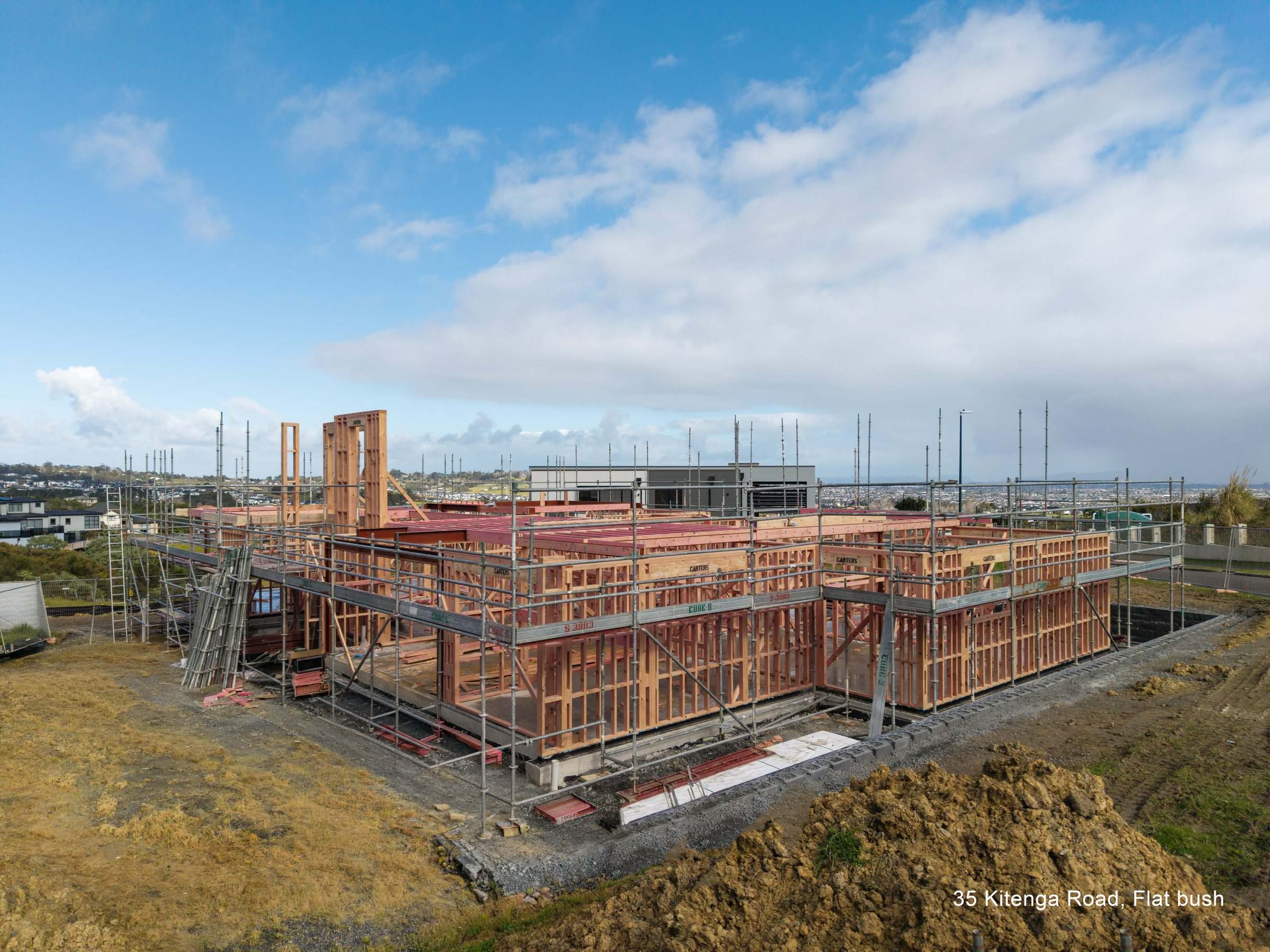
- Progress payments at agreed stages, such as foundations, framing, closed in, linings and practical completion.
- Final payment at completion, often once the code compliance certificate is issued.
Before each payment, the bank usually wants a progress claim from the builder and may ask a valuer to confirm the work has reached that stage.
What banks usually ask for
- A signed building contract, ideally fixed price, with a payment schedule.
- Plans and specifications, often with the building consent.
- An “on completion” valuation estimating what the finished home will be worth.
- Evidence of builder’s insurance and any guarantee or warranty product offered.
- Your income, expenses and deposit details, as with any home loan.
Lenders prefer clear, complete contracts. Large provisional sums or a vague scope can make a bank cautious.
The new-build LVR exemption
The Reserve Bank limits how much banks can lend to borrowers with small deposits through loan-to-value ratio (LVR) restrictions. Loans to build a new home are exempt from these restrictions. This can make it possible to build with a smaller deposit than buying an existing house.
The exemption does not guarantee a loan. Banks still apply their own lending policies, including serviceability tests. LVR settings also change from time to time, so check the current position with your bank or a mortgage adviser.
Matching the contract to the lender
Your building contract’s payment stages need to line up with what your bank will release. If the builder asks for payment before the bank will fund that stage, you will need to cover the gap yourself. Share the draft contract with your lender before signing.
Costs to budget beyond the contract
- Interest during construction.
- Valuation and legal fees.
- Development contributions and infrastructure charges, if not in the contract.
- Driveways, landscaping, fencing and window furnishings, if excluded.
- A contingency for variations or unexpected site conditions.
Getting ready
- Talk to a bank or mortgage adviser early, before finalising your design.
- Get a realistic build price based on your actual site.
- Check the payment schedule works for your lender.
- Keep a contingency outside the loan.
At Tungsten we provide a clear contract, scope and payment schedule that you can share with your lender. Get in touch to talk about your project, or read our guide to building contracts.
Frequently asked questions
How much deposit do I need to build a new home?
New builds are exempt from the Reserve Bank's loan-to-value restrictions, so some banks will lend with a smaller deposit than for an existing home. The amount you need still depends on the bank's own criteria, your income and the project. Talk to a mortgage adviser or bank early.
When is the first progress payment made?
Commonly a deposit is paid on signing, followed by stage payments such as foundations or floor, frame, closed in, linings and completion. The exact stages are set out in your building contract and must match what your lender will fund.
Do I pay interest during the build?
Usually yes, but only on the money drawn down so far. As more payments are made, the interest cost rises. Build this into your budget, especially if you are also paying rent or another mortgage.
What happens if the build costs more than the loan?
Variations and extra costs not covered by the loan generally have to be paid from your own funds or through an approved loan increase. A contingency held outside the contract is the best protection.
Sources and further reading
- Payment schedules and retention money, building.govt.nz
- Protection for homeowners, building.govt.nz
- Loan-to-value ratio restrictions (Reserve Bank of New Zealand)
This guide is general information for New Zealand, current at the review date above. Rules and council requirements change, so check your own situation with the relevant council, your lawyer or other qualified adviser before relying on it.